SEO audits
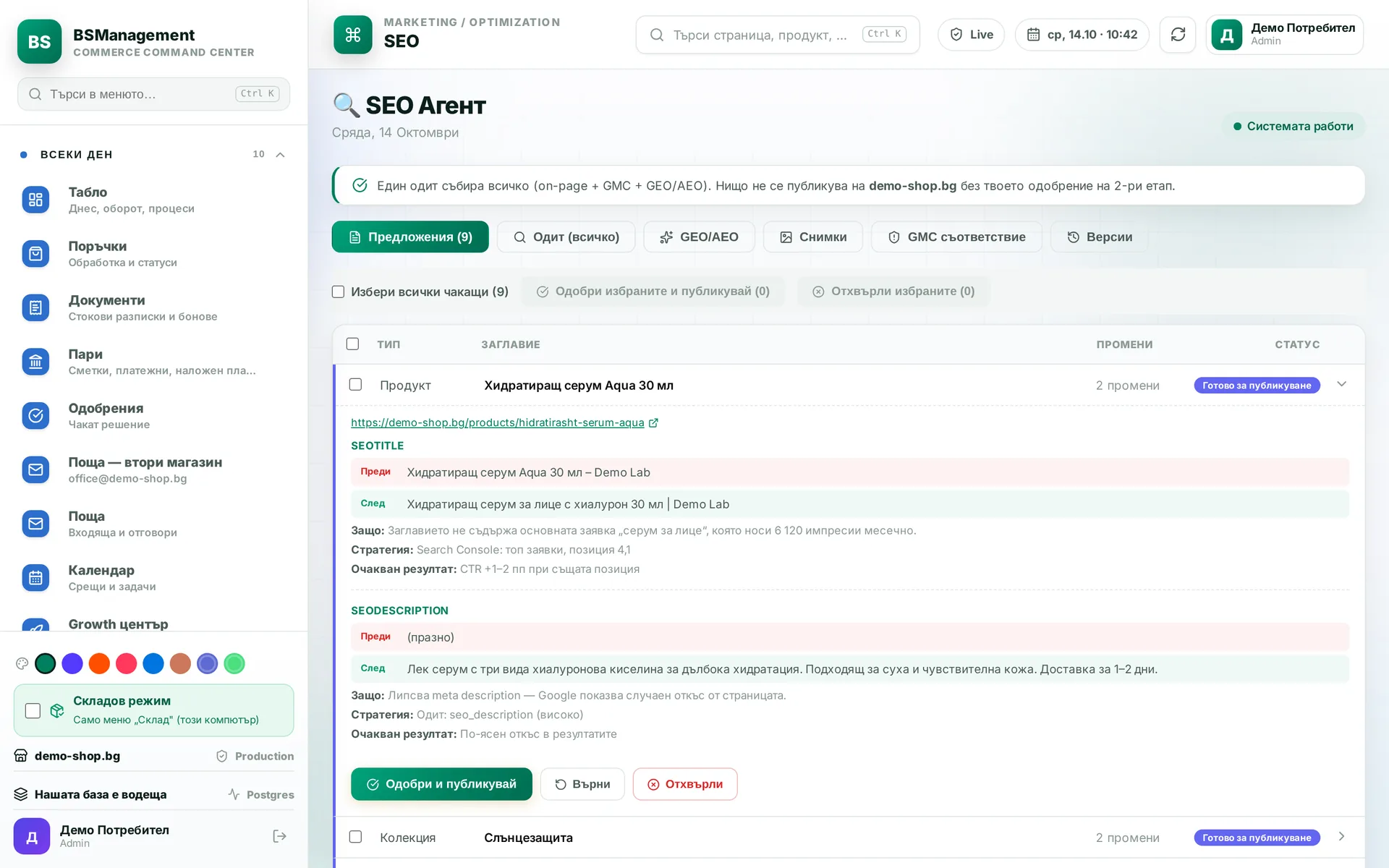
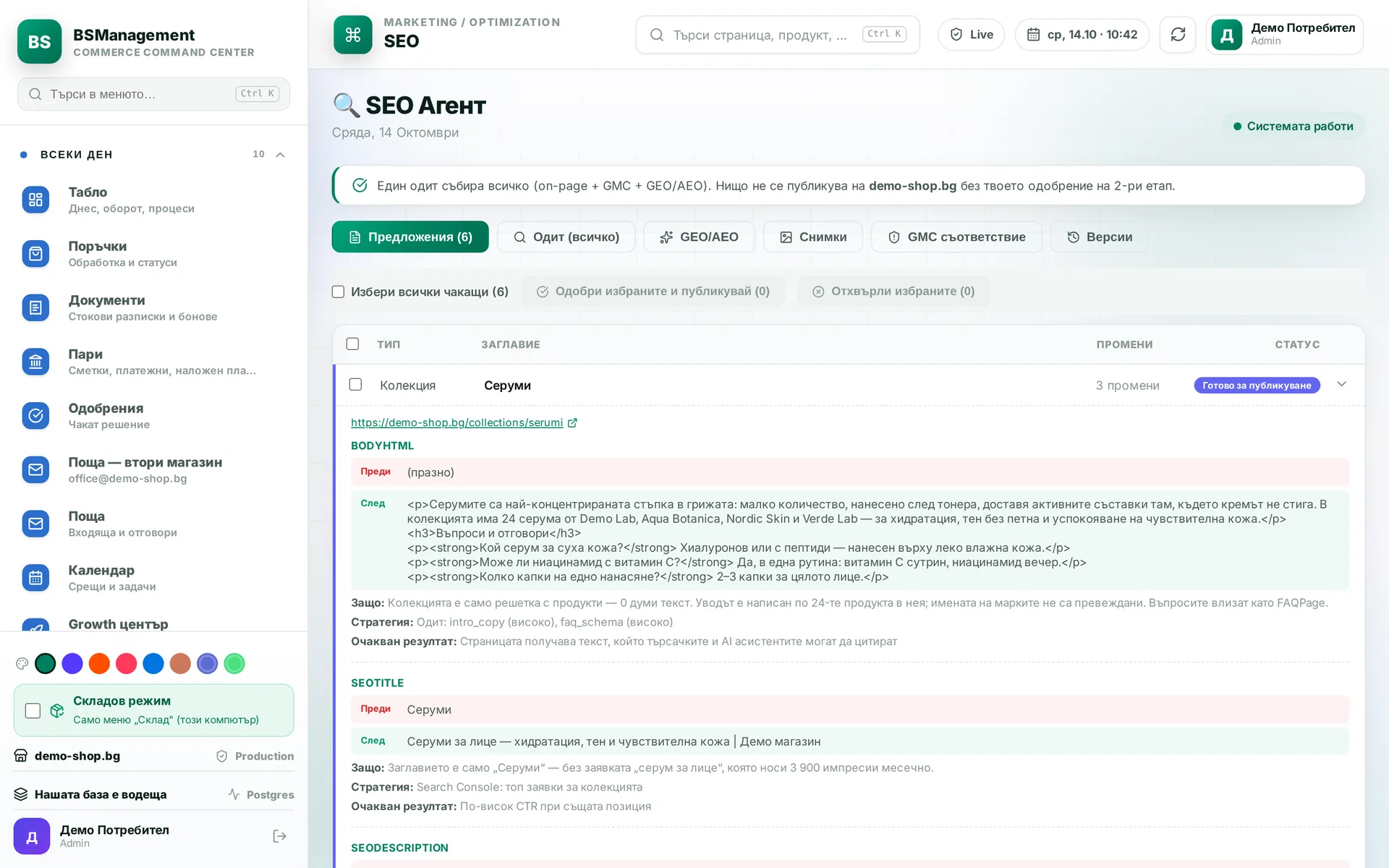
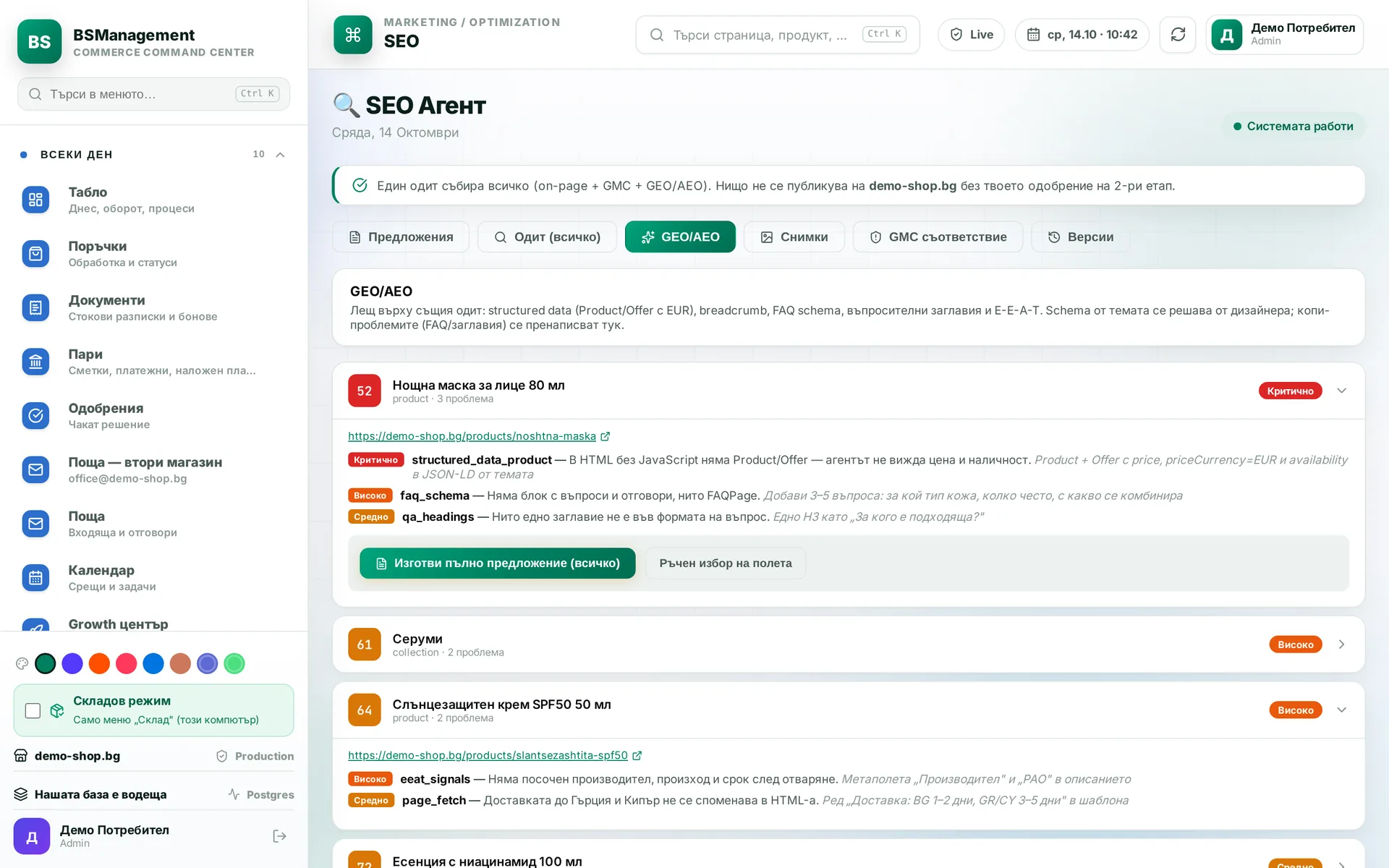
The audit walks through the store's pages and products and checks titles, meta descriptions, structured data and Merchant Center data. Each issue gets a written fix proposal. Nothing reaches the store until a person approves it.
Runs in: KoreanCare
SEO lab
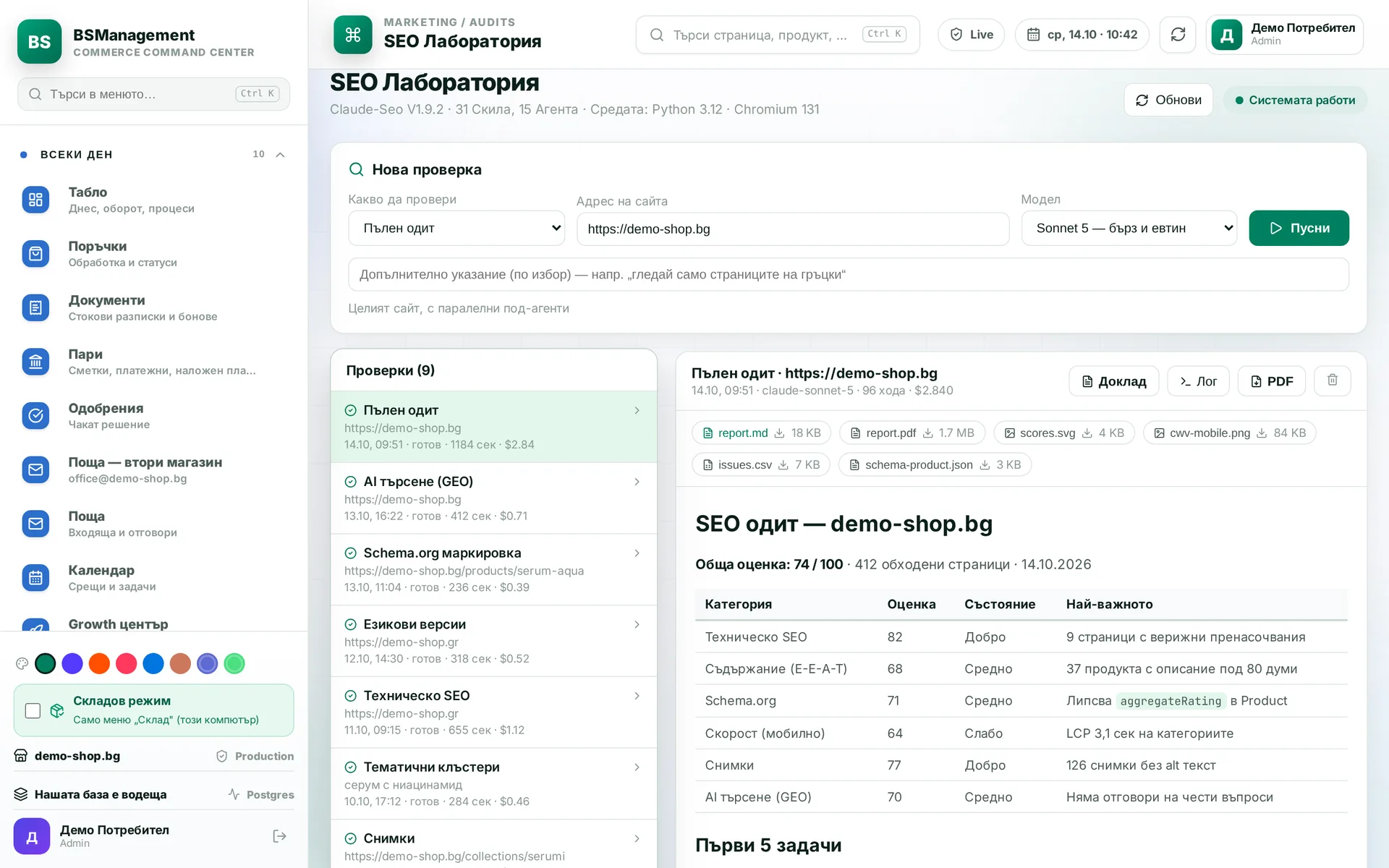
Enter a site address and start an audit: technical, schema, E-E-A-T, speed and AI-search readiness. The agent crawls the site in the background and you follow its log live. At the end you get a report with charts and a downloadable PDF.
Runs in: KoreanCare
Search Console
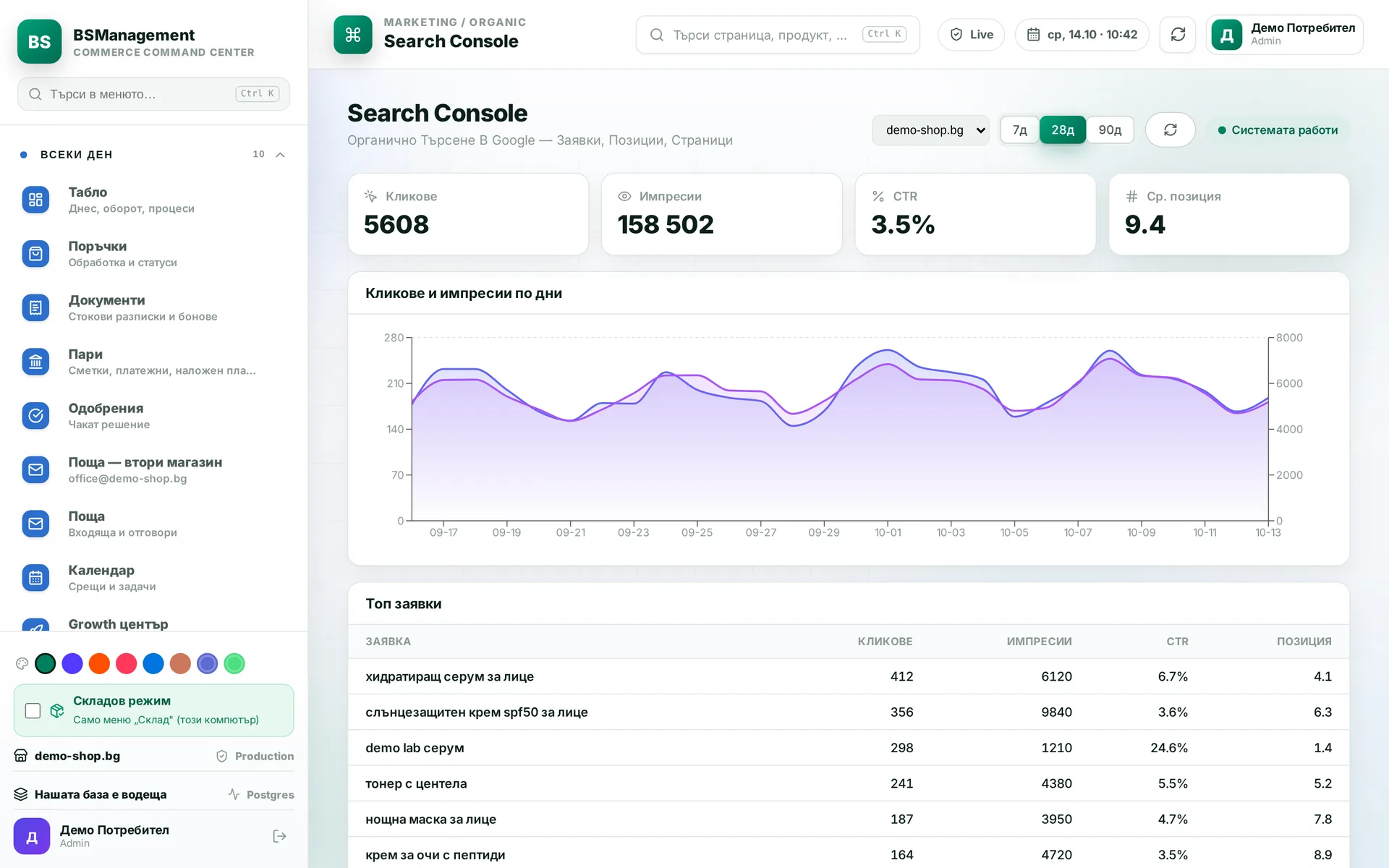
Google Search Console data is shown inside the system, split by market and domain: queries, impressions, clicks and average position. You see which pages are slipping and which queries get impressions but no clicks. That tells you what to rewrite, so you are not guessing.
Runs in: KoreanCare
Blog
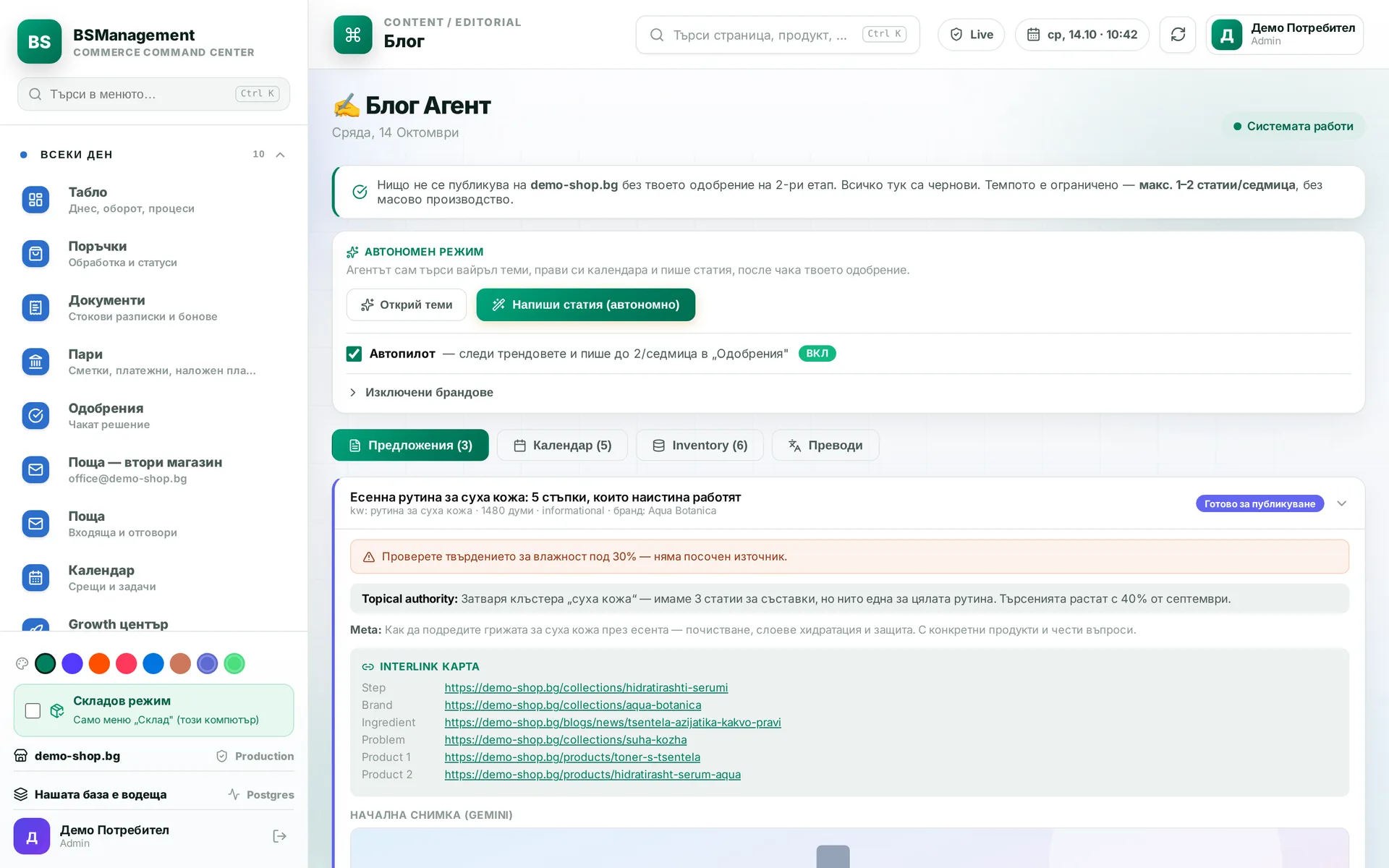
Topics are chosen from what people search for. Each article is written from a template and translated into the store's languages, and internal links point to the page in the same language. You can publish by hand or let the autopilot write at a pace you set. The finished article goes into the Shopify blog.
Runs in: KoreanCare
Buyer guide pages
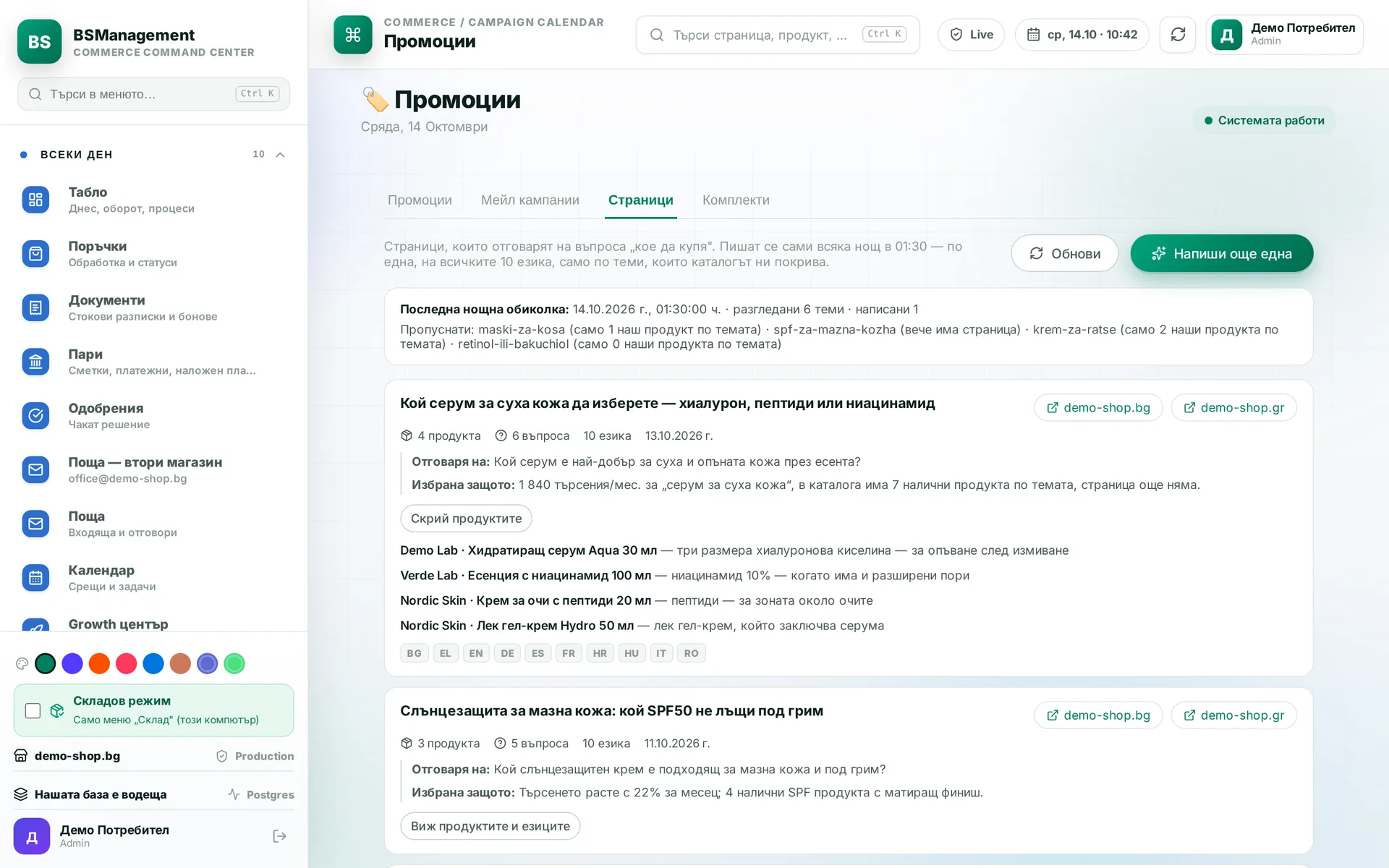
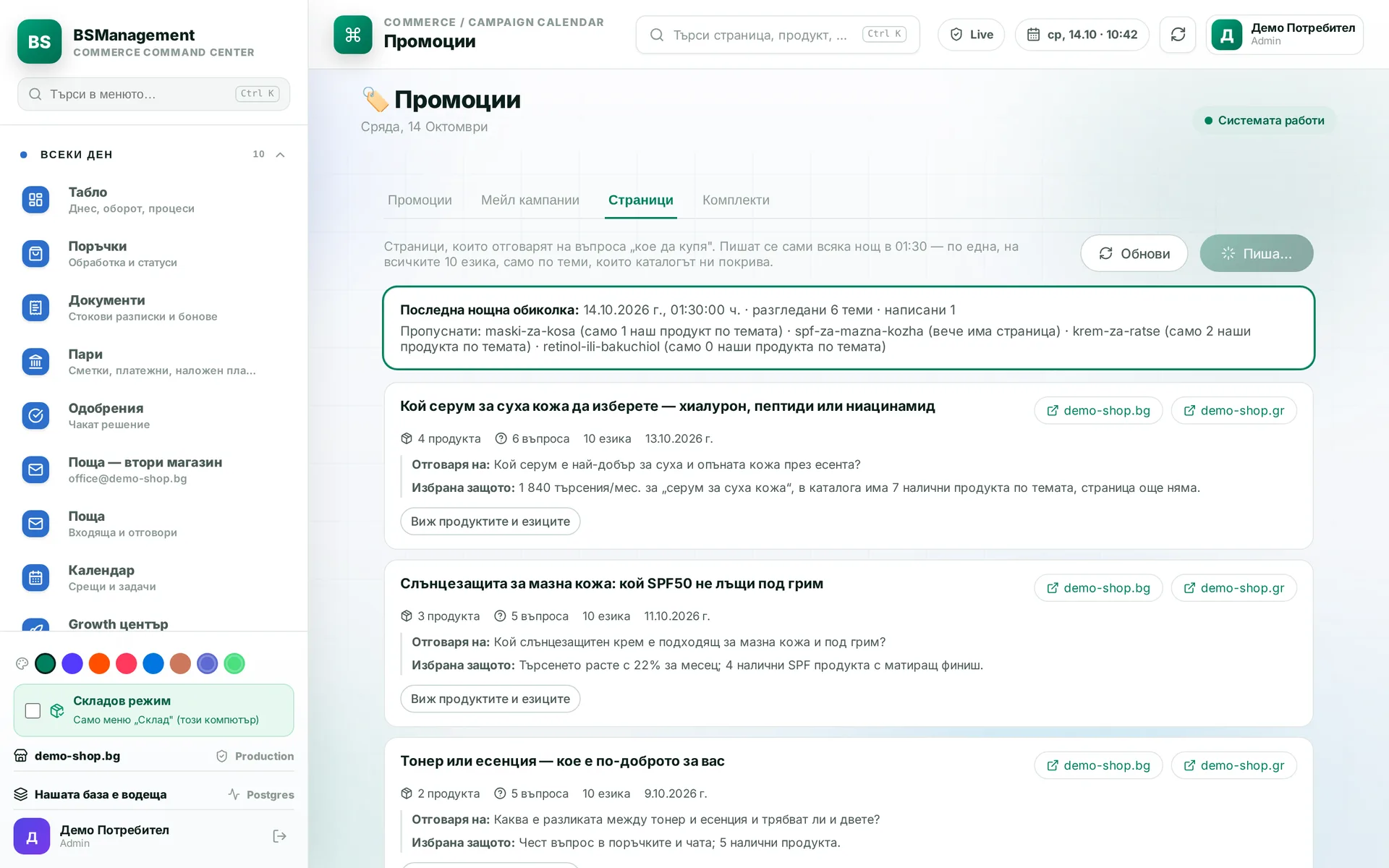
Each page answers one buyer question, such as "which one should I pick" or "which is better", with an explanation, specific products from the catalog and an FAQ. Products are picked from stock by code rather than by the model, so the page never recommends something you don't sell. The text is written separately for each language.
Runs in: KoreanCare
Finding new topics
On a schedule, the system looks at what people are searching for right now and picks a topic the catalog actually covers. Topics without enough products in stock, or that already have a page, are skipped. The chosen topic becomes a new buyer guide page.
Runs in: KoreanCare
Content performance
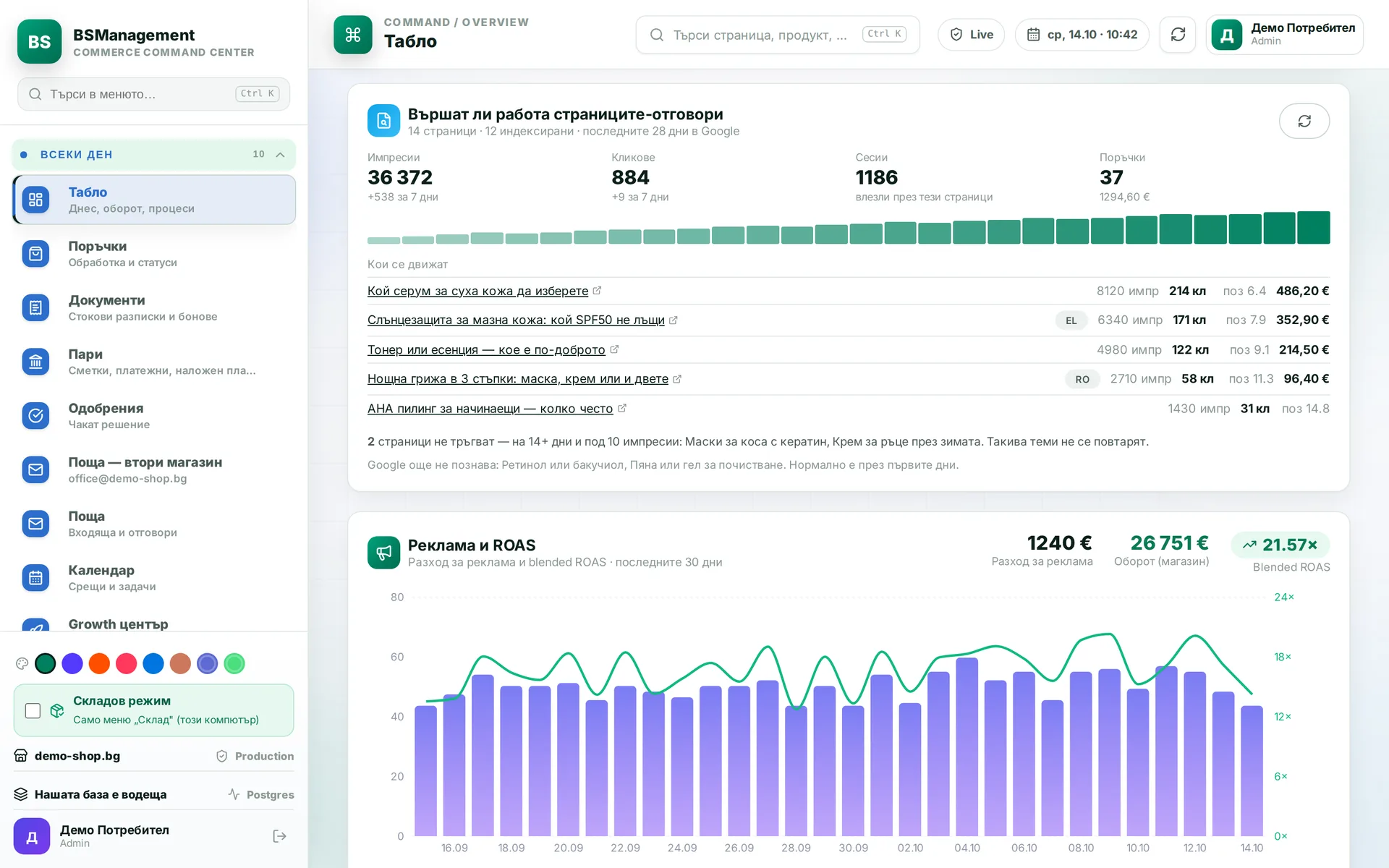
Every morning the system records figures for each published page: impressions and position from Search Console, sessions and revenue by landing page from GA4, and, for pages with no impressions, whether they are indexed at all. You see how things change over time, and which content brings sales and which brings nothing.
Runs in: KoreanCare
Collection SEO
Each collection gets an intro above the products, a longer text below them and an FAQ that is published as FAQPage markup. The copy is written from the products actually in the collection, and brand names are never translated. The SEO title and meta description in Shopify are filled in too.
Runs in: KoreanCare, LedWhite, GreekTruck
Collection and brand listing pages
The collections and brands listing pages are built from the live catalog, so a new brand appears on its own. Collections are grouped by their address, each brand links to its collection and empty ones are hidden. The copy is stored for each language, so search engines see real text on the page.
Runs in: KoreanCare
Translations
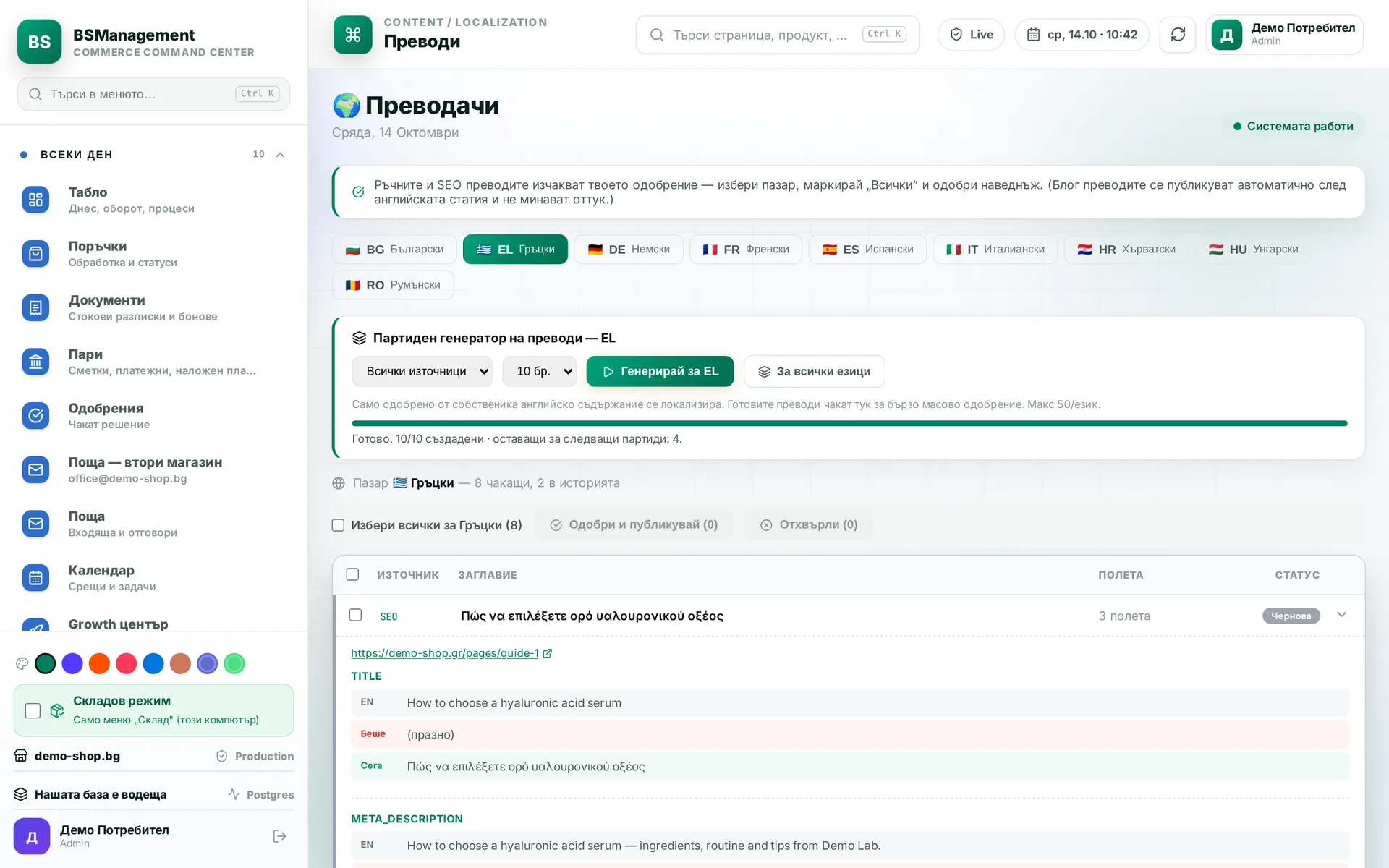
A product, page or article is translated into all of the store's languages with one button, or in bulk overnight. The translation adapts the text to the market, and chosen fields such as ingredients stay untranslated. The system also finds stale translations, where the original changed after it was translated.
Runs in: KoreanCare, BS Omni ERP
Product naming
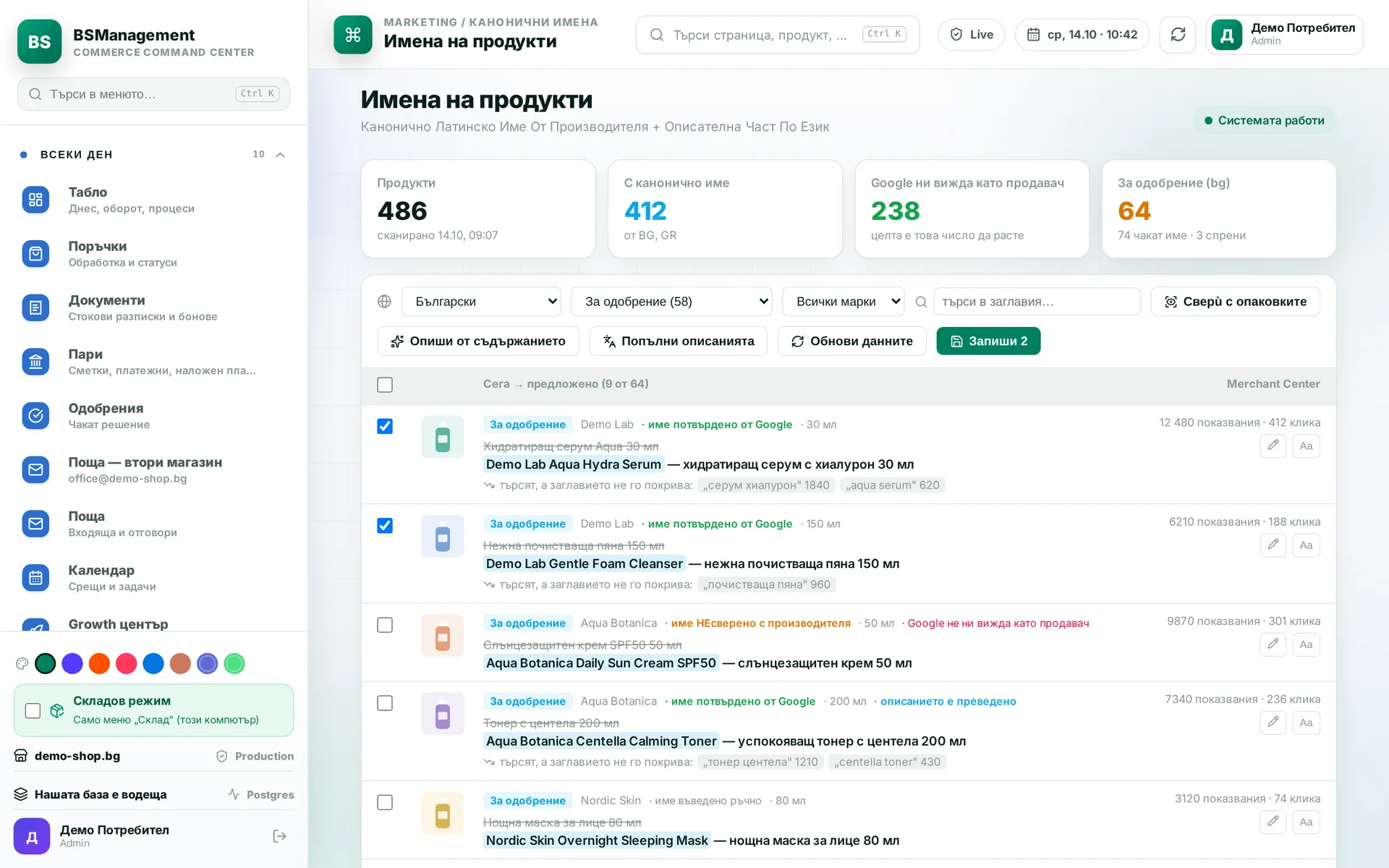
The title is assembled from one formula in every language: product type, brand, original Latin name and size. The Latin name stays exactly as the manufacturer writes it, because that is how people search for it. Where channels need a different name, the product carries two names.
Runs in: KoreanCare, BS Omni ERP
Name check
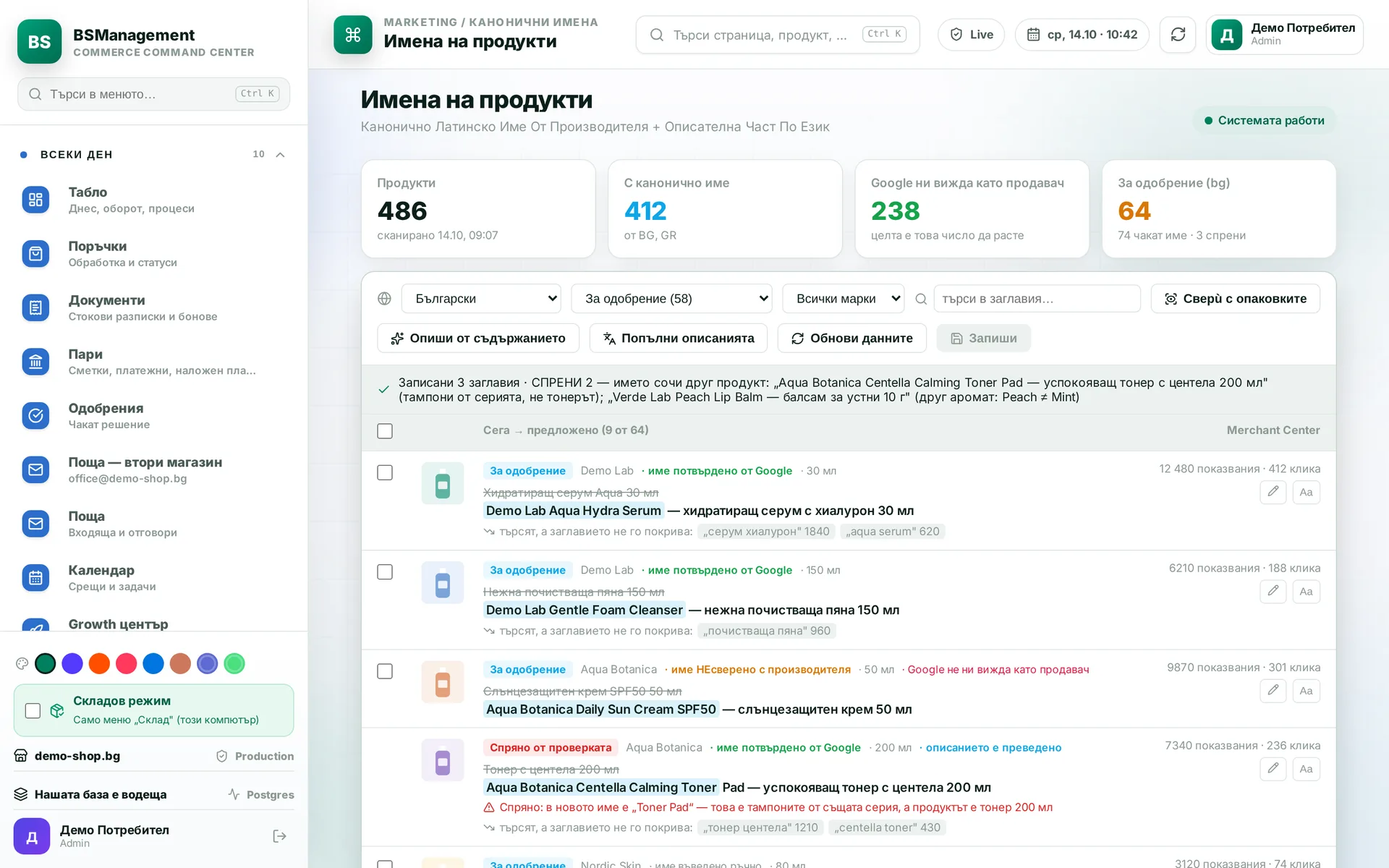
Before saving, the system checks that the new name describes the same product. A neighbouring variant from the range or a different scent does not pass. When in doubt the product is not saved and the operator sees why. That way a wrong name never reaches the store.
Runs in: KoreanCare
Language versions
Every page points correctly to its versions in other languages, including when the languages are on different domains. When an article is translated, its internal links are rewritten to pages in the same language. Readers never land on the wrong language and search engines see no duplicate content.
Runs in: KoreanCare
Fast static site
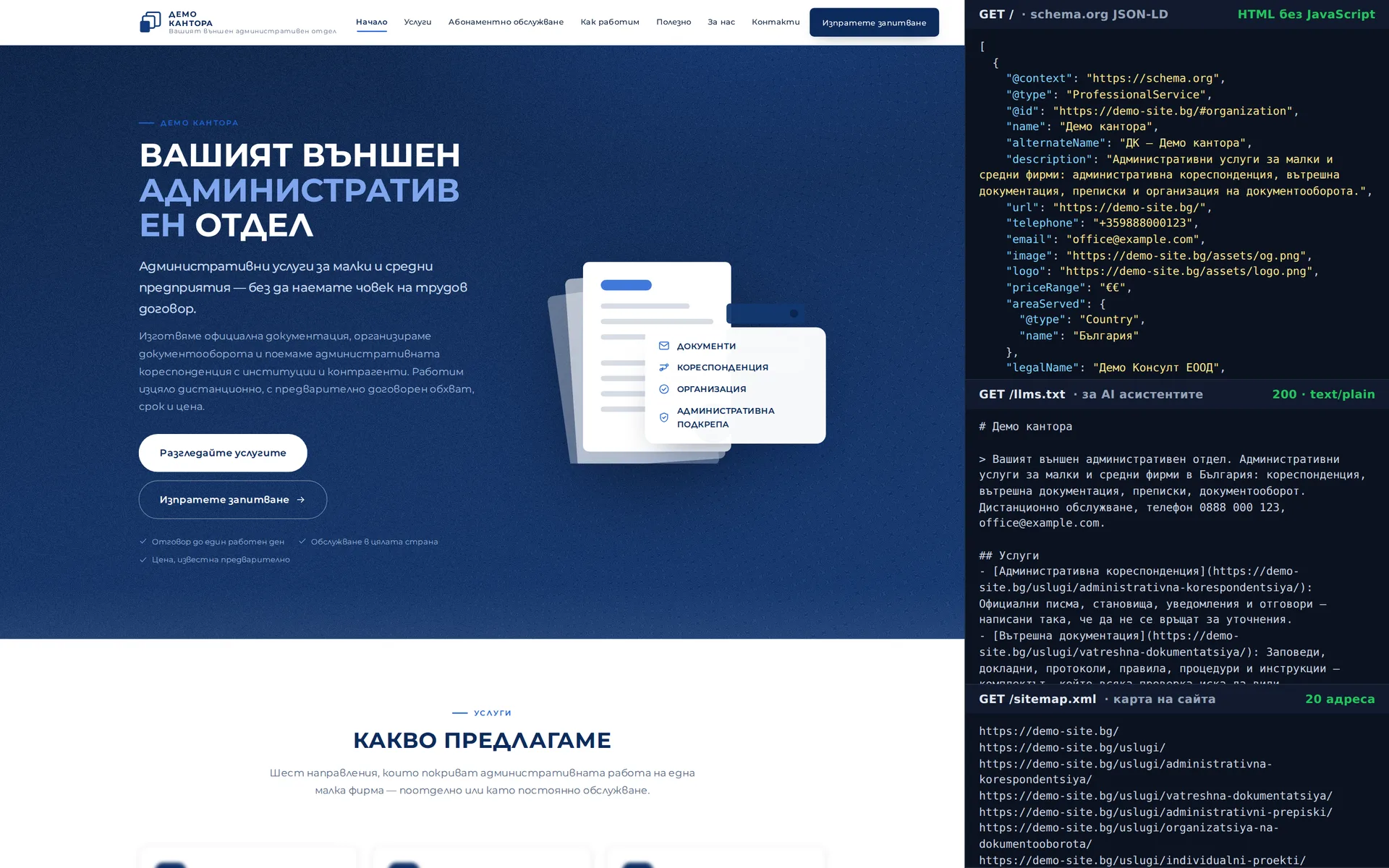
The site is generated as ready HTML pages with no heavy framework, so it opens instantly. It ships with structured data, a sitemap, RSS and llms.txt. Search engines and AI assistants read the content without running JavaScript.
Runs in: Digitalna Kantora
Local SEO
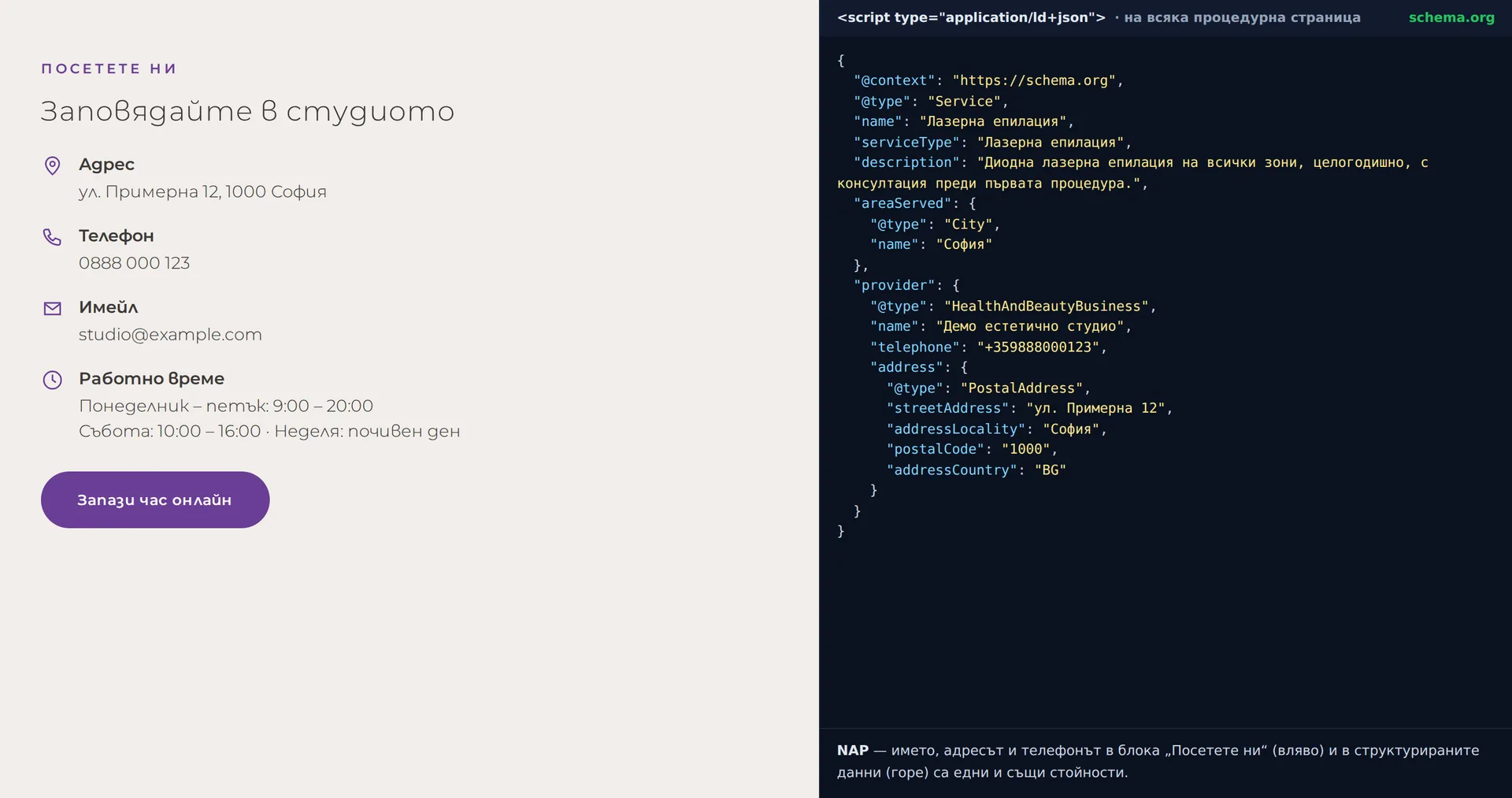
The audit checks the Google Business Profile, address and phone data, reviews and local schema. The result is a plan of what to fix so the business shows up in city searches and in AI assistant answers. Suited to businesses with a physical address.
Runs in: Mell laser clinic
AI agent readiness audit
The check crawls the whole catalogue, every product and every collection, and fetches each page the way an agent sees it, without JavaScript. For each page it reports whether it shows the price, stock, who the product is for and where it ships. It follows fixed rules with no AI model involved, and you can run it as often as you like.
Runs in: KoreanCare
Visibility in AI assistants
We ask a web-searching AI assistant real buyer questions in the language of each market. We record who it cites, on which topics the store is missing and who shows up instead. That result is the starting point against which we measure every fix.
Runs in: KoreanCare
Site speed
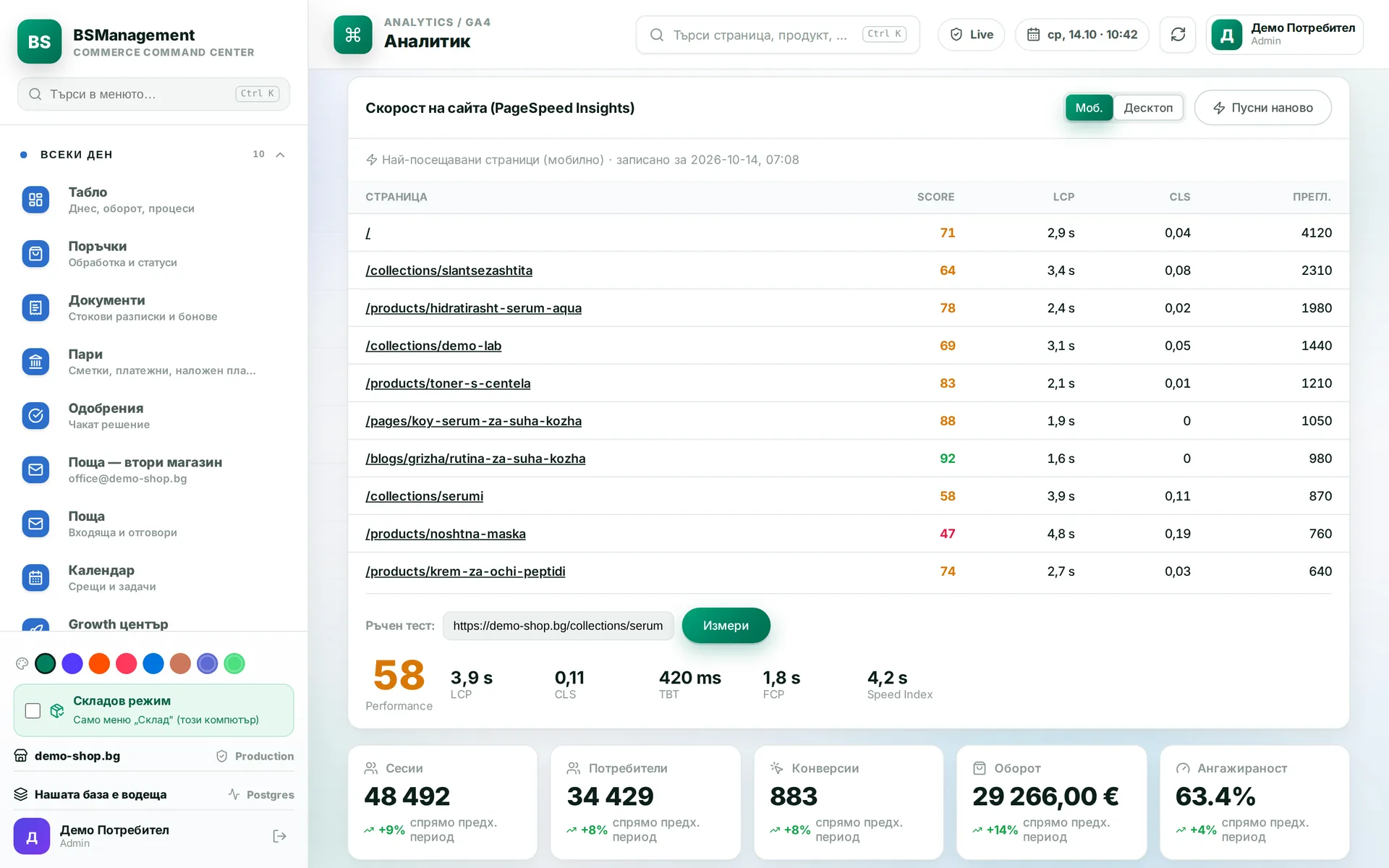
Once a day the system runs the most visited pages through PageSpeed, for mobile and desktop. Results are kept per day, so you can see when, and after which change, the site slowed down. The test starts on its own; nobody has to run it.
Runs in: KoreanCare
Traffic analytics
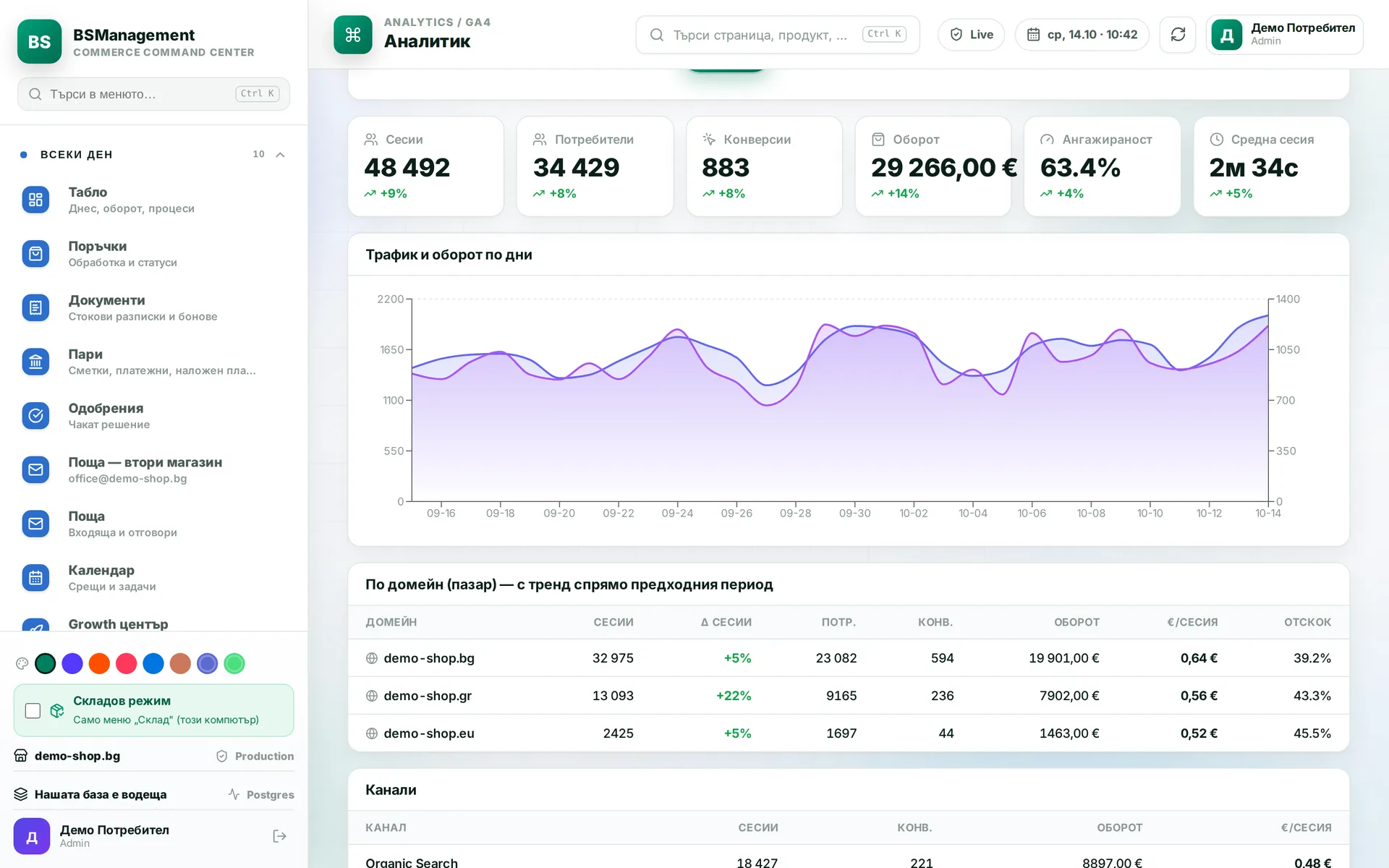
Google Analytics 4 data is shown inside the system: sessions, sources, landing pages and revenue. Revenue is credited to the page where the visitor entered the site, rather than to checkout. That shows which page actually leads to a purchase.
Runs in: KoreanCare, Cosmetics of Korea
Product structured data
Every product carries its own data for Google (product, offer and breadcrumb), and the site carries data for the organisation and its search box. A barcode goes in as a GTIN only if it is a real code with a valid check digit, because Google rejects internal barcodes. That way products do not lose their rich results over one invalid field.
Runs in: GreekTruck
Full-catalogue SEO in the market's language
The system writes descriptions, meta data and alt texts for the whole catalogue in the market's language, in overnight batches. Where a well-described reference version of the product exists, it translates the text from that. Facts come only from the data, with no invented warranties or delivery times. Before every batch the system keeps a copy of the old text, and a rerun skips what is already written.
Runs in: GreekTruck